
Doge HHS migrant housing contract has gained significant attention over the past years as it is a major initiative by the U.S. Department of Health and Human Services (HHS) to house migrants particularly the unaccompanied minors. This contract has raised concerns on issues of social responsibility government expenditure and efficiency. This article will take you through the rudiments of the topic whether you desire to learn about the fundamentals or the larger political and economic influence of it.
This contract is placed at the boundary between the public service and accountability due to its massive public funding and constant scrutiny. Ranging between the emergency shelters and long-term services the Doge HHS contract intends to meet the urgent migrant demands and to balance efficiency and transparency.
The Doge HHS migrant housing contract
Doge HHS migrant housing agreement is a federal program that aims to assist the housing requirements of migrants especially unaccompanied children and families that cross the U.S. border. It spends hundreds of millions on an emergency housing facility supportive services and local infrastructure in areas where migration has been most severe.
Key goals include:
- Finding safe hygienic and low-cost housing options for migrants.
- Promoting health and well-being amongst residents.
- Providing educational courses health services and legal assistance.
- Promoting the local economies by creating employment and building infrastructure.
Facilities are operated under federal guidelines by private and nonprofit organisations like Family Endeavours in Texas that combine operational efficiency with service delivery.
History and Contractual Information
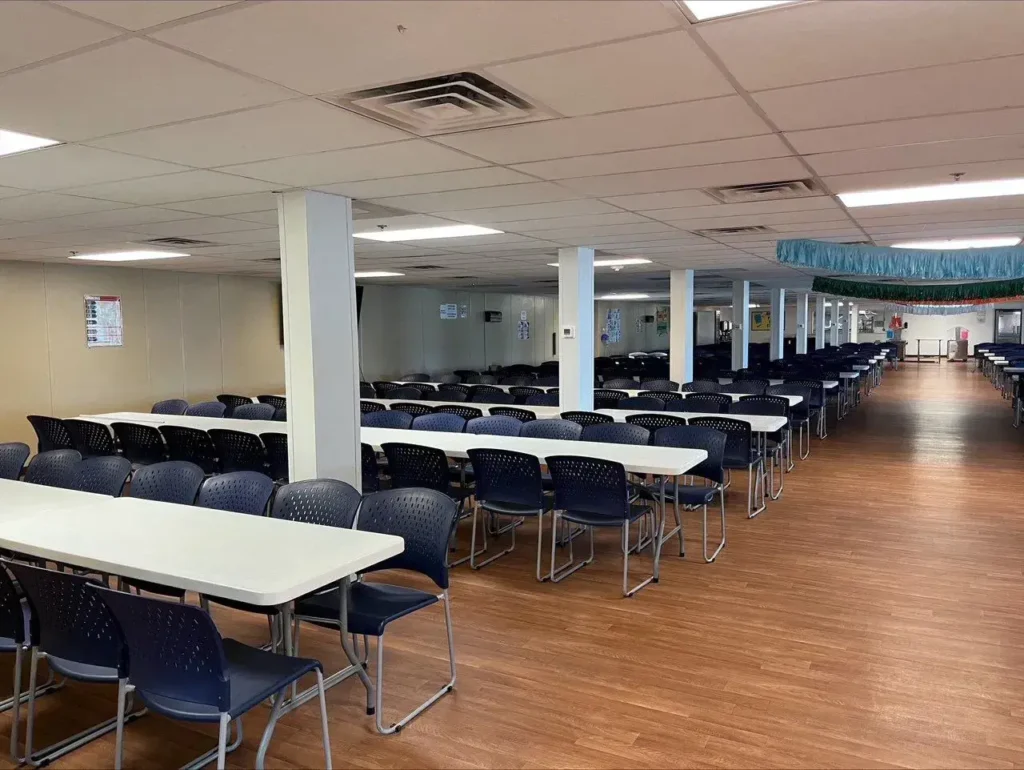
In 2021 with an increasing number of migration flows HHS granted a sole-source contract of approximately 18 million a month to Family Endeavours to use in Pecos Texas. The facility contained recreational spaces classrooms and medical rooms and was designed to accommodate as many as 3000 unaccompanied children.
It was reported that the Pecos plant was running at less than 10% capacity by 2025 which cast some doubt on its cost-effectiveness. The Department of Government Efficiency (DOGE) in turn suggested the cancellation of the contract estimating a continuous savings of more than 215 million dollars per year on cessation of payments on unused space.
Geographical and Scope of Coverage
The contract is in several regions in central and southern states of the U.S. and they target regions with a significant number of migrants. It has a combination of accommodation:
- Short-term temporary shelters.
- Medium-term apartments and family.
- Women’s facilities (women only) children’s facilities or a mixed family.
This geographic diversity warrants the allocation of resources in the most effective way as well as meeting the needs of special migrant groups.
Breakdown and Economics of Financing.
Knowledge of the fiscal allocation shows the way the public money is spent:
| Budget Item | Allocation (USD) | Funding Source | Payment Schedule |
| Land Acquisition | 1500000 | State Grant | Q1 Year 1 |
| Construction Materials | 4000000 | Federal Grant | Q2 & Q3 Year 1 Q1 Year 2 |
| Furnishing & Facilities | 1000000 | Private Donations | Q4 Year 1 |
| Total | 6500000 | – | – |
It is funded by federal grants state donations and private donations. Supervision by DOGE makes things transparent and taxpayer money is well used.
Read also:Health Threetrees Com VN: Your No-Frills Guide to Holistic Wellness
Hardships and Scandals
The contract has been criticised despite its aims:
- The problem of low occupancy of key facilities questioned the issue of efficiency.
- Competition was restricted in sole-source contracting.
- Wastes like the reports on the needless expenditure on shelters that are not used.
- Scrutiny came in the way of publicity and political audits and viral coverage.
Though Family Endeavours claims that they met their requirements opponents of the organisation believe that the outcomes might be enhanced through more efficient resource utilisation and competitive bidding.
DOGE’s role in Checks and Balances
The Department of Government Efficiency (DOGE) also proactively audits such contracts with the view of:
- Cut waste and government expenditure fraud.
- Make sure that the results are in line with the interests of the people.
- Fine contractors on performance.
- Suggest changes to the contract depending on the usage and cost-efficiency.
Interventions by DOGE have cancelled costly contracts to idle facilities and promoted active management sensitive to real-time migrant requirements.
Post Exercise Benefits and Perspectives
Notwithstanding the difficulties the Doge HHS migrant housing contract demonstrates some prospect of tangible effect:
- Infrastructure and provision of services that migrants and communities need.
- Employment in the health sector social services and building.
- A nimble system to address the changing migrant flows.
To achieve success in the future it is better to plan the work coordinate the work of the contractors and government and supervise the use of funds to prevent waste.
Types of Migrant Housing
| Housing Type | Units Planned | Description |
| Temporary Shelters | 150 | Immediate relief housing |
| Apartments | 200 | Medium-term housing for families |
| Family Housing | 50 | Long-term housing with child support |
This variety of diversity guarantees that migrants get decent and safe housing irrespective of their condition.
Effect on Communities and Economy
Local economies and communities are also impacted by the contract:
- Increases employment in building and services.
- Favours community-building through humanitarian shelter conditions.
- Promotes good labour market practices among the migrants.
The raised concerns are the escalated requirements of local resources and the sustainability of the continued funding.
Conclusion
Doge HHS migrant housing contract is an arduous but critical government initiative to enable safe accommodation of migrants especially the unaccompanied minors. It has been criticised for being ineffective and expensive but with the DOGE supervision there is transparency and accountability. The contract is beneficial to both the migrants and the local communities by concentrating on flexible safe and affordable housing. Continuous monitoring effective use of resources and dynamic management will be the keys to success and this contract will be a milestone towards responsible and humane support of migrants.
Meta Description